about eight months before Bond’s London crisis
Tracy’s Murder
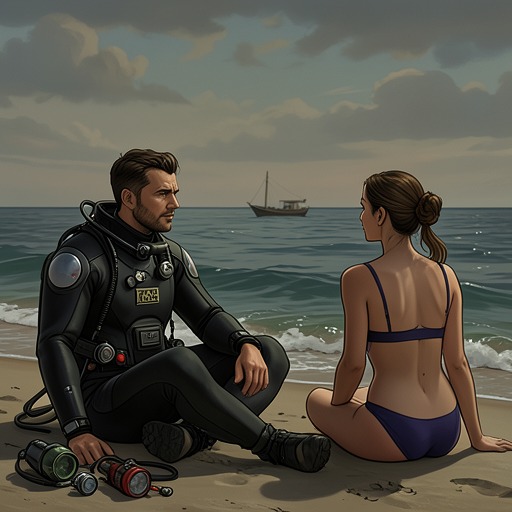
After [James Bond](entity:character-recall-character-james-bond-1156b307a36f) married [Tracy](entity:character-recall-character-tracy-ddcb75ceb1e0), [Ernst Stavro Blofeld](entity:character-recall-character-ernst-stavro-blofel-902198fb90f4) arranged her murder within hours of the wedding. Bond survived the attack, but the loss of his wife left him with grief that neither his work nor his usual habits could dislodge.
The killing became the source of the psychological collapse that later threatened Bond’s career, even as its deeper consequences remained to surface in [Japan](entity:location-recall-location-japan-2b426de89e42).
the months after Tracy’s death
A Declining Agent
Bond returned to work after his bereavement but grew inattentive and unreliable. He was late, drank too much, lost money gambling, and made dangerous mistakes on assignments that had once suited him.
[M.](entity:character-recall-character-m-b87b5df38479) saw a valued officer becoming a security risk, while Bond himself assumed that his career in the [Double-O Section](entity:organization-recall-organization-double-o-section-940c6eaf2052) was ending. His professional crisis was the visible form of a grief he could not master.
one day before Bond’s summons to M.
Molony’s Diagnosis
At lunch at Blades, [Sir James Molony](entity:character-recall-character-sir-james-molony-ec875a7f1c8d) challenged [M.](entity:character-recall-character-m-b87b5df38479)’s plan to dismiss Bond. He explained that Bond’s decline followed traumatic bereavement and that no physical illness accounted for his symptoms.
Molony urged M. to give Bond an urgent and difficult assignment, one that would demand his abilities and draw him beyond his private despair. M. agreed to consider another chance rather than accept a routine discharge.
the afternoon before Bond’s summons
The Rose Garden
Bond sat in Regent’s Park feeling physically and emotionally depleted. He had tried a succession of doctors and remedies, but none had restored his sleep, appetite, or interest in life; even the flowers and insects held his attention more than his work did.
He knew he was late returning to the office and expected [Mary Goodnight](entity:character-recall-character-mary-goodnight-b8101e9df636) to scold him. His indifference to the hour captured how close he had come to abandoning the habits and duties that had once defined him.
late afternoon the same day
M.’s Summons
[Mary Goodnight](entity:character-recall-character-mary-goodnight-b8101e9df636) tried to reach Bond through the Service’s urgent telephone line, then discovered that he had left his required receiver in his desk. When he finally returned, she straightened his tie and urged him to take [M.](entity:character-recall-character-m-b87b5df38479)’s call seriously.
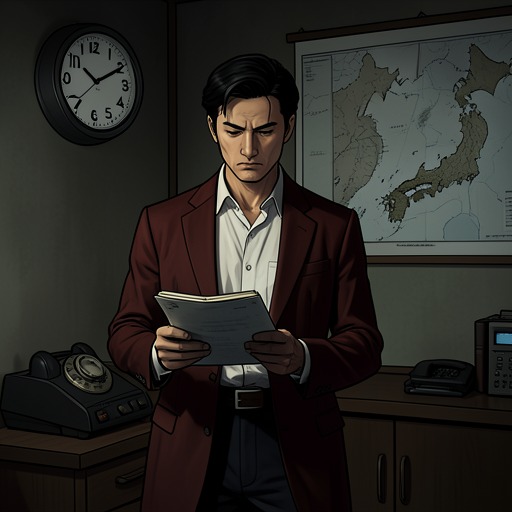
Bond entered M.’s office expecting dismissal and offered his resignation. Instead, M. angrily told him that he was being promoted temporarily to the Diplomatic Section and entrusted with a mission of exceptional importance.
the afternoon of Bond’s summons
The Japanese Assignment
[M.](entity:character-recall-character-m-b87b5df38479) explained that [Japan](entity:location-recall-location-japan-2b426de89e42) had been intercepting high-grade Soviet communications but was sharing the material with the United States rather than [Britain](entity:location-recall-location-cc30c45755f2). He wanted Bond to persuade [Tiger Tanaka](entity:character-recall-character-tiger-tanaka-16b354eb877b), head of the [Japanese Secret Service](entity:organization-recall-organization-ea8cb087c281), to give Britain access to it.
The assignment would rely on diplomacy and judgment instead of gunplay. M. admitted that success was improbable, but believed Bond was the right man to attempt it—and the challenge that Molony had recommended.
immediately after M.’s office
Tanner’s Briefing
[Bill Tanner](entity:character-recall-character-bill-tanner-027c396c4d3d) explained that Bond would travel under Australian diplomatic cover and work with [Richard Lovelace Henderson](entity:character-recall-character-richard-lovelace-he-cbb683eda7f3) in [Tokyo](entity:location-recall-location-2ef35aba743c). If Tanaka agreed, the intelligence could be routed through the Australian station and then onward to [London](entity:location-recall-location-1bfd335cdd1b).
The Americans were not to learn of the approach. Bond understood that he would be asking [Japan](entity:location-recall-location-japan-2b426de89e42) to risk its relationship with the United States, and that any failure could leave [Britain](entity:location-recall-location-cc30c45755f2) and Australia to absorb the diplomatic consequences.
the evening after the assignment briefing
A Farewell to the Office
After leaving [M.](entity:character-recall-character-m-b87b5df38479)’s office, Bond kissed [Miss Moneypenny](entity:character-recall-character-miss-moneypenny-b9e25c4ae473) and asked her to arrange dinner with [Mary Goodnight](entity:character-recall-character-mary-goodnight-b8101e9df636). The sudden invitation delighted both women, who took it as evidence that the old Bond had returned.
His restored excitement did not erase the grief behind it, but the mission gave him a purpose he had lacked. He began preparing to leave [Britain](entity:location-recall-location-cc30c45755f2) rather than resign from the Service.
one week after M.’s summons
The Flight East
Bond flew from [London](entity:location-recall-location-1bfd335cdd1b) toward [Tokyo](entity:location-recall-location-2ef35aba743c) aboard a [Japan](entity:location-recall-location-japan-2b426de89e42) Air Lines aircraft, studying the unfamiliar details of the journey and accepting the possibility that his old life might be altered by the assignment. He travelled under his diplomatic cover as a junior Australian official.
The long flight marked his departure from the routines that had accompanied his decline. Japan would test not only his ability to negotiate but also his capacity to become engaged in the world again.
Bond’s arrival day in Tokyo
Meeting Dikko
At Haneda airport, Bond endured a crowded arrival and a frustrating wait for his suitcase before [Richard Lovelace Henderson](entity:character-recall-character-richard-lovelace-he-cbb683eda7f3) appeared to collect him. Henderson’s gruff manner and fluent Japanese quickly established him as an ally who knew the city and its customs.
Henderson took Bond to the Okura and then out drinking. He warned him that [Tokyo](entity:location-recall-location-2ef35aba743c) could be bewildering, expensive, and closely watched, and began explaining the social forms Bond would need to navigate.
Bond’s first day in Tokyo
The Tokyo Cover
Henderson arranged Bond’s hotel stay and had cards printed identifying him as an Australian Embassy second secretary in the Cultural Department. The cover was thin enough that Japanese officials could recognize its intelligence purpose, but it supplied the diplomatic standing Bond needed.
As they drove through [Tokyo](entity:location-recall-location-2ef35aba743c), Henderson explained that manners, hierarchy, and patience mattered in dealing with powerful Japanese officials. Bond was entering a culture in which an apparently minor breach could have major consequences.
Bond’s second evening in Tokyo
The Bugged Bar
At Henderson’s [Ginza](entity:location-recall-location-897d85839f8c) bar, Henderson discovered a microphone concealed beneath their table and recognized a watcher associated with Tanaka. Rather than lower his voice, he used the surveillance to denounce Tanaka and explain that Bond was the real object of the Japanese chief’s attention.
The outburst showed Bond that the approach would be observed from the beginning. Henderson was angry at the intrusion, but he also made clear that Tanaka’s scrutiny was deliberate and that Bond would have to earn the Japanese leader’s confidence.
later that evening
Henderson’s Advice
Over drinks, Henderson described Tanaka as both friend and rival, bound to him by years of shared pleasure and the Japanese idea of reciprocal obligation. Tanaka had already spent some of that obligation by granting Bond an early audience and sharing intelligence.
Henderson advised Bond to frame any bargain as a long-term investment for [Japan](entity:location-recall-location-japan-2b426de89e42), not a quick exchange. He warned that Tanaka’s duties to his own superiors could outweigh personal friendship, however warmly the two men treated one another.
the morning after the Ginza drinking
The Hangover Visit
Henderson arrived at Bond’s hotel with a severe hangover and a brandy, ginger ale, and a rueful account of the previous night. Bond reassured him that his angry political talk had caused no lasting offence between them.
The two men set out for Tanaka’s meeting, with Henderson recovering just enough to guide Bond through the elaborate route into the Japanese chief’s offices. Their easy companionship contrasted with the high stakes of the intelligence negotiation.
the morning of Bond’s first meeting with Tanaka
The Hidden Offices
Henderson led Bond through the Bureau of All-Asian Folkways, whose public research departments concealed Tanaka’s classified organization. A false construction site masked a passage to a room that descended like a lift into an unused underground station converted into private offices.
The elaborate approach impressed on Bond that Tanaka’s power rested on disciplined secrecy and careful misdirection. Henderson left him to continue alone, and Bond entered the hidden headquarters as the prospective petitioner.
the morning of Bond’s first meeting with Tanaka
Tanaka’s First Audience
Tanaka received Bond in his underground office and quickly demonstrated that he understood the purpose of the British approach. Their conversation began with political history and [Japan](entity:location-recall-location-japan-2b426de89e42)’s position in the Pacific, testing Bond’s ability to avoid being drawn into a debate beyond his authority.
Bond kept the discussion focused on future cooperation. The meeting established mutual respect, but Tanaka made no promise to provide the intercepted Soviet material.
during Bond’s first meeting with Tanaka
The Intercepted Message
Tanaka showed Bond a classified Soviet message reporting possession of a two-hundred-megaton weapon and plans for a high-altitude test near Novaya Zemlya. The message described a strategy to threaten [Britain](entity:location-recall-location-cc30c45755f2) with nuclear destruction and use that fear to undermine its alliance with the United States.
It also instructed Soviet stations to prepare for possible evacuation and destruction of archives if given a secret signal. Bond recognized that the message’s value lay in its direct wording, not merely in a sanitized summary.
immediately after Bond read the intercepted message
Tanaka’s Disclosure
Bond argued that withholding the warning from [Britain](entity:location-recall-location-cc30c45755f2) was dishonourable, while Tanaka answered that [Japan](entity:location-recall-location-japan-2b426de89e42) had pledged loyalty to its American allies. Bond insisted that an edited account would lose much of the intelligence’s value and that Britain needed time to prepare.
Tanaka disclosed the material despite Bond’s oath not to reveal it. He explained that he owed Britain a personal debt from his earlier life and believed Bond’s conduct justified the risk. The exchange established a bond between the two men and gave Bond a crucial first success.
September 20
The Nuclear Test
The Soviet test took place near Novaya Zemlya, producing the public alarm anticipated in the intercepted message. Western governments moved to protect Soviet personnel in [Britain](entity:location-recall-location-cc30c45755f2), while Moscow’s intended threat to British resolve became an urgent international crisis.
The danger confirmed the value of Tanaka’s disclosure and strengthened Bond’s case that the intelligence should be shared. It also made the question of Britain’s access to Japanese intercepts more than a bureaucratic dispute.
days after the September 20 test
Kennedy’s Retaliation Pledge
[John F. Kennedy](entity:character-recall-character-john-f-kennedy-3cac4eb2c6d3) declared that the United States would retaliate fully if the Soviet Union detonated a nuclear device in any country outside Soviet territory. Moscow answered with a reciprocal warning against Western nuclear tests on Soviet or allied soil.
The exchange checked the immediate pressure on [Britain](entity:location-recall-location-cc30c45755f2) but exposed the strain in the alliance: Americans might not want to risk their own territory for a threatened partner. Bond saw that Tanaka’s information had helped Britain understand the danger before the crisis peaked.
several days after Kennedy’s pledge
The Threat’s Suspension
Tanaka privately told Bond that [Japan](entity:location-recall-location-japan-2b426de89e42)’s central authorities had indefinitely postponed the Soviet plan. He cautioned Bond not to repeat the information, while Bond pointed out how Tanaka’s earlier disclosure had helped relieve international tension.
Tanaka then made clear that full access to the Japanese intelligence source would demand an exchange of comparable value. The first warning had bought [Britain](entity:location-recall-location-cc30c45755f2) time, but it had not secured the continuing flow of intercepts.
during Bond’s following weeks in Tokyo
The Blue Route Offer
Bond offered [Britain](entity:location-recall-location-cc30c45755f2)’s Macao Blue Route intelligence network as payment for access to Tanaka’s material. Tanaka revealed that his organization had penetrated the network from its beginning and already received its information under the name Route Orange.
The revelation exposed a serious British intelligence failure and destroyed Bond’s proposed bargaining chip. Rather than retreat, Bond suggested that Tanaka visit [London](entity:location-recall-location-1bfd335cdd1b) to inspect what Britain could offer, keeping the negotiation open without claiming powers he did not possess.
the weeks after Bond’s arrival in Tokyo
A Month of Assessment
Bond spent his time outside official meetings with Tanaka and Henderson, travelling and drinking with them while sensing that Tanaka was continually assessing his character. Henderson believed the Japanese chief was considering a proposal from his superiors, but could not say what the decision would be.
Bond understood that Tanaka’s earlier gifts had created obligations on both sides. He also knew that he had no intelligence resource comparable to the intercepts to offer, leaving the outcome dependent on personal trust and whatever test Tanaka’s government might devise.
about one month after Bond’s arrival in Tokyo
The Scissors Game
At a geisha gathering in [Yokohama](entity:location-recall-location-04ec9eddd516), Bond and Tanaka played scissors, paper, and stone before the Madame and Trembling Leaf. Tanaka announced that he would defeat his guest, but Bond won the final game after choosing without a deliberate pattern.
Bond later pretended that he had read Tanaka’s character and selected his own symbols accordingly. The playful contest had become a test of honour and judgment; its outcome helped bring Tanaka to invite Bond to his private house.
later that night
The Invitation Home
Tanaka invited Bond to his house for a nightcap and a confidential conversation. He explained that the open partitions made it harder for anyone to listen through the walls, then demanded Bond’s promise not to divulge what he was about to hear.
Bond gave his word, believing the invitation itself signalled a significant change in their relationship. Tanaka’s confidence would soon place Bond in a position where loyalty to his promise conflicted with his duty to [Britain](entity:location-recall-location-cc30c45755f2).
late September during Tanaka’s confidential visit
The Death Collector
Tanaka described a foreign botanist, [Dr Guntram Shatterhand](entity:character-recall-character-dr-guntram-shatterh-91d2276618d6), who had established an expensive private garden on [Kyushu](entity:location-recall-location-fb5dae5375a0). He had imported poisonous plants and dangerous animals, fortified his property, and staffed it with former members of the [Black Dragon Society](entity:organization-recall-organization-25c82b465e74).
Tanaka said that the garden had become a destination for people seeking suicide. More than five hundred Japanese had died there in under six months, and the authorities could not easily arrest a man whose grounds were presented as a scientific collection.
during Tanaka’s account of Shatterhand
The Poison Garden
Tanaka gave Bond a government inventory of the imported vegetation, detailing plants that could poison, paralyze, blind, or kill. The estate’s lakes held predatory fish, and its grounds contained snakes, scorpions, spiders, and volcanic vents.
Shatterhand and his wife protected themselves with specialized clothing while the public warnings around the property only attracted more visitors. The carefully assembled hazards made the garden not a merely neglected danger but a deliberate environment of death.
before dawn during Tanaka’s account
The Suicide Shrine
Tanaka explained how Japanese traditions of honour and suicide helped draw people to the garden. He described a student who had killed himself after failing an examination and recalled stories in which death expiated shame or fulfilled a duty to the dead.
Bond rejected the glorification of suicide, while Tanaka insisted that the practice carried a different meaning in [Japan](entity:location-recall-location-japan-2b426de89e42). Their argument revealed why ordinary deterrents had failed: the garden had become both a public fascination and a place where despair could be presented as an honourable choice.
before dawn during Tanaka’s account
The Deadly Attraction
Tanaka described the journey to the estate as a sequence of attractions ending in a gamble with death. Visitors crossed the sea, climbed the walls, and chose among poisonous plants, venomous animals, predatory fish, or the volcanic vents.
Police barriers and warning signs had not stopped the desperate from entering, while the doctor’s assurances of cooperation kept officials from taking decisive action. Tanaka concluded that the deaths had to be stopped, but the legal and political obstacles left him seeking an exceptional solution.
about one month before Bond’s mission to Kyushu
The Fallen Investigator
Tanaka had sent one of his own agents into the garden to investigate. The man was found near the coast blinded, delirious, and badly burned; he died soon afterward, repeating a poem about pink dragonflies above graves.
The agent’s death showed that the property could defeat even a trained Japanese operative. Tanaka admitted that he had done nothing more than apologize to his superiors and wait for a solution, then told Bond that he had been waiting for him.
the same night as the geisha party
The Assassination Test
Tanaka told Bond that the Japanese Prime Minister had authorized a secret test: Bond must enter the Castle of Death and kill the man inside. If he succeeded, [Japan](entity:location-recall-location-japan-2b426de89e42) would consider [Britain](entity:location-recall-location-cc30c45755f2) worthy of receiving the intelligence; if he failed, the request would be refused.
The target was introduced as Shatterhand, but Bond did not yet know that the botanist was his old enemy. He accepted the challenge as the price of MAGIC 44, while Tanaka insisted that the task be treated as a state secret.
the morning after the assassination assignment
A New Appearance
Tanaka took Bond to a discreet bathhouse, where a young attendant named Mariko helped dye his skin and hair and cut his hair in a Japanese style. He emerged looking sufficiently local to move through crowds without immediately drawing attention.
The disguise was the first step in a larger transformation. Bond’s Western identity and belongings were removed, and Tanaka began teaching him how to behave as a Japanese miner from [Fukuoka](entity:location-recall-location-98259a2915e2).
the first day of the journey south
Lessons in Comportment
On the train, Tanaka instructed Bond to push through crowds, avoid Western jokes, and suppress anger. Bond questioned the absence of swear words in Japanese and learned that insults could provoke a dangerous response.
Tanaka’s lessons emphasized that the disguise depended as much on conduct as appearance. Bond’s willingness to endure unfamiliar customs became part of the preparation for a mission that would place him among people trained to notice outsiders.
during the first train journey south
The Stolen Wallet
A stocky masked passenger jostled Bond and stole the wallet Tanaka had provided for his cover. Tanaka advised against calling the conductor, since an investigation would expose them without a realistic chance of catching the thief.
Bond accepted the loss and continued the journey, but later recognized the same man at Toba and again at a restaurant. His suspicion that the stranger was following them would prove correct.
the evening at Toba
The Kamikaze Story
At their inn, Bond demanded that Tanaka tell him about his wartime training as a kamikaze pilot. Tanaka described leaving intelligence work in Europe to join a unit whose young pilots willingly sacrificed themselves against Allied ships.
He recalled the attacks as both terrible and beautiful, and admitted that he still dreamed of diving on an aircraft carrier. His account exposed the wartime convictions beneath Tanaka’s urbane manner and helped Bond understand the intensity with which he approached duty and death.
the following day
The Sea Shrines
At the [Outer Shrine of Ise](entity:location-recall-location-847dfb981c8a), Bond imitated the ritual of prayer while concentrating on the correct sequence of movements. Tanaka judged that he had passed unnoticed and then pointed out that Bond’s manner among Japanese students had improved.
The exercise showed that the disguise was beginning to work. Bond could not yet inhabit Japanese customs naturally, but Tanaka’s training was making him less conspicuous and more capable of surviving the approach to the castle.
later that day
The Kobe Beef Test
Tanaka brought Bond to a cattle farm and ordered him to feed a cow beer and massage its back with raw spirit. Bond followed the instructions despite his irritation, discovering afterward that the treatment was part of the production of prized beef.
The odd trial was another measure of Bond’s composure and obedience. It also gave Tanaka an opportunity to reward him with a meal, balancing the severe training with the hospitality that sustained their growing friendship.
that afternoon
The Ninja School
Tanaka took Bond to a remote training castle where Japanese agents learned ninjutsu, the arts of stealth and unarmed infiltration. Bond watched trainees cross a moat and scale a high wall, but one climber fell to his death during the demonstration.
The display provided Bond with practical knowledge of ropes, pitons, and covert movement, while also exposing the lethal standards of Tanaka’s training system. Bond remained skeptical of the methods, but he would soon depend on them.
the next morning in Kyoto
The Old Brothel
Tanaka took Bond to a former brothel that had been turned into a national monument. Bond mocked the attempt to present its past as dignified cultural history, while Tanaka defended its poetry and customs.
Their banter made clear how often Bond resisted the solemn framing of Japanese traditions. The argument did not damage their friendship, and they continued south toward the island where Bond’s mission would become immediate.
aboard ship in the Inland Sea
The Death Haiku
Tanaka introduced Bond to the poetry of Basho and asked him to compose a haiku. Bond answered with the thought that a person lives twice: at birth and when facing death.
Tanaka praised the verse and asked whether Bond had been thinking of the mission. Bond dismissed the question, though the poem revealed how clearly he understood the possibility that the task might end his life.
the evening before reaching Fukuoka
The Fugu Feast
In [Beppu](entity:location-recall-location-41427d5f3798), Tanaka showed Bond the volcanic vents and explained that one could be made far more dangerous by closing its outlet. He then took Bond to eat fugu, a delicacy whose organs could kill if handled incorrectly.
Bond drank heavily before tasting the fish, which proved mild and pleasant. The meal closed Tanaka’s course of cultural training, but the conversation and the danger of the food kept the approaching mission in view.
the morning of the drive to Fukuoka
The Black Dragon Pursuit
Bond spotted the masked wallet thief following their car on a motorcycle. At his urging, the police driver pursued the rider; Bond leapt from the car and helped bring him down, but the man died in the struggle.
Tanaka found Bond’s wallet and a diary on the corpse, along with a [Black Dragon Society](entity:organization-recall-organization-25c82b465e74) mark. The diary showed that the agent had tracked their journey for his master, confirming that Shatterhand’s organization had identified Tanaka’s movements.
later that morning in Fukuoka
The Castle Plans
At the local police headquarters, Tanaka and Superintendent Ando studied an aerial photograph of the estate. Its high sea-facing walls, guarded grounds, and changing breaches made a landward entry almost impossible.
Bond examined the property and proposed approaching from the water, climbing the seaward wall, and hiding among the grounds. Tanaka supplied ninja equipment and arranged for Bond to stay with an Ama family on a nearby island.
during the planning meeting in Fukuoka
The Enemy’s Face
When the police produced photographs of the supposed botanist and his wife, Bond recognized them as [Ernst Stavro Blofeld](entity:character-recall-character-ernst-stavro-blofel-902198fb90f4) and [Irma Bunt](entity:character-recall-character-irma-bunt-dec5dec963ed). Blofeld had altered his appearance, but Bond knew the man who had arranged [Tracy](entity:character-recall-character-tracy-ddcb75ceb1e0)’s murder.
Bond concealed his recognition from Tanaka. If he revealed the truth, the Japanese authorities might arrest Blofeld and remove Bond’s chance for personal revenge. He chose to keep the mission within his own hands, turning a state assignment into a private vendetta.
that afternoon
Arrival on Kuro
A police launch carried Bond, Tanaka, and Superintendent Ando to [Kuro Island](entity:location-recall-location-2614b9ad7f76), where the local priest and elders received them. Tanaka explained that Bond would pass as an anthropologist studying the Ama divers and would be lodged with the Suzuki family.
The priest accepted the real purpose of the mission and blessed it, while the villagers were given a harmless cover story. Bond met [Kissy Suzuki](entity:character-recall-character-kissy-suzuki-fce3a19fe48b), who greeted him without the formal deference he had encountered elsewhere and agreed to host him.
the evening of Bond’s arrival
The Ama Welcome
Bond watched the Ama divers return from the sea and recognized Kissy among them. He admired the physical strength and ease of their communal life, which felt very different from the world of intelligence work he had left behind.
Kissy’s family welcomed him into their home, and she treated him as a practical guest rather than an honoured stranger. The warmth of the island offered Bond an unexpected glimpse of a life organized around work, family, and the sea.
the first morning on Kuro Island
The First Day at Sea
Bond accompanied Kissy in her boat as she dived for abalone, while a trained cormorant named [David](entity:character-recall-character-david-a0465b0b2f3d) brought fish to the surface. He rowed, learned to tend the rope, and eventually descended into the water himself to collect shells.
By the end of the day, Bond had begun to feel at home with Kissy and the work of the island. The peaceful experience also helped condition his body for the swim to the castle, though he tried to treat the days as a temporary escape from the coming violence.
the second day on Kuro Island
The Island Legend
Kissy explained that the islanders avoided speaking about the castle, which they regarded as a place where evil had opened its mouth. A local legend held that the [Six Guardians](entity:character-recall-character-fea51335226b) would send a man from across the sea to kill the King of Death.
The story gave Bond’s mission a mythic form for the islanders, though he regarded it with skepticism. Kissy’s unease, and the villagers’ fear of the property, showed how deeply the garden’s presence had disturbed life across the water.
the third morning on Kuro Island
The Mission Revealed
After Kissy told Bond that men from the mainland had been asking about him, he admitted that he intended to cross to the castle and kill its owner. Kissy understood the danger and asked whether the priest had approved the plan.
Bond explained that using a foreigner would help [Japan](entity:location-recall-location-japan-2b426de89e42) present the affair as a dispute among outsiders. Kissy accepted his account and insisted that she would accompany him through the dangerous waters, or at least wait nearby to help him return.
the afternoon before the infiltration
The Six Guardians’ Blessing
Kissy took Bond to the shore where the weathered statues of the [Six Guardians](entity:character-recall-character-fea51335226b) stood at the low-tide line. She prayed for his success and asked the figures to protect both the Ama and the man from across the sea.
Bond felt an unexpected awe before the primitive stone forms and silently asked for good fortune. Kissy later believed the statues had nodded their approval, while Bond refused to claim that he had seen them move.
the night before the full moon
The Midnight Swim
Bond dressed in his black ninja suit and swam across the channel with Kissy guiding him through the currents. At the base of the great wall, she turned back toward the island while Bond retrieved his climbing gear.
Bond began his ascent alone, carrying the equipment needed to cross the wall and move through the poison garden. His route from the sea left little room for retreat and made the personal danger of the mission unmistakable.
the first night inside the estate
The First Infiltration
Bond scaled the two-hundred-foot wall and searched the grounds for shelter and a possible route into the castle. He found a gardeners’ shed where he could hide his gear, then made a cautious survey of the lake, the volcanic vents, and the poison-laden plantings.
His reconnaissance revealed how meticulously the estate had been arranged to kill trespassers. Bond also found a low door beneath the castle that might offer entry on a later night, but he was forced to witness the garden’s real function before he could leave.
before dawn during Bond’s first night inside
The Piranha Lake
A blinded and swollen suicide-seeker staggered through the garden and plunged into the lake. Predatory fish attacked him until he drowned, while Bond watched helplessly from concealment.
The death confirmed that the garden’s horrors were not merely accidental risks. Bond understood that Blofeld’s creation offered a series of deliberately cultivated ways to die, and that each victim’s suffering added another reason to reach the castle.
near dawn on Bond’s first night inside
The Salaryman’s Death
Bond watched a Japanese official walk into a boiling fumarole, apparently choosing a deliberate and formal death. The man spoke privately before stepping over the warning stones, and only his hat remained when the vent consumed him.
The episode sharpened Bond’s anger at the system that allowed the garden to continue operating. It also revealed the difficulty of intervening: Bond could neither communicate with the man nor risk exposing himself before he had reached Blofeld.
the morning after Bond’s first infiltration
The Guards’ Cruelty
From his hiding place, Bond saw guards chase a peasant through the grounds, trip him with a stave, and throw him into the piranha lake. They laughed as the fish killed him and treated the death as entertainment.
The guards’ conduct revealed that the estate was not merely a refuge for suicide-seekers. Its staff actively protected the machinery of death and helped turn the victims’ despair into a spectacle.
later that morning
Blofeld’s Morning Rounds
Blofeld appeared in armour with [Irma Bunt](entity:character-recall-character-irma-bunt-dec5dec963ed), reviewing the guards’ work and approving the result of the killing in the lake. Bond listened as the pair discussed the rising number of deaths and their plan to repeat the concept in other countries.
Blofeld presented the garden as a novel enterprise and spoke of the victims as statistics. His calm conviction had become unstable and grandiose, revealing a man whose genius had curdled into madness.
during Blofeld’s rounds that morning
The Blown Hideout
Blofeld noticed that the gardeners’ hut stood open and entered to inspect it. His sword cut through the sacks concealing Bond and struck him across the back, but the layers were thick enough to prevent a serious wound.
Although Blofeld found no intruder, Bond understood that the refuge had been compromised. He abandoned any plan to wait and decided that the coming night would be his only practical chance to act.
the following night
The Oubliette Trap
Bond returned to the castle and entered through the low door, avoiding a concealed man-trap. He worked his way through the cellar and reception rooms, using the darkness and the sound of Wagner to cover his approach.
In the passage to the private quarters, a concealed platform swung beneath him. Bond plunged into the oubliette and struck his head, while an alarm summoned the guards. His first attempt to reach Blofeld ended in capture.
immediately after Bond’s fall
Bond’s Identity Exposed
The guards dragged Bond from the oubliette and found him wearing the ninja suit beneath his disguise. He tried to maintain the role of a deaf and dumb miner, but [Irma Bunt](entity:character-recall-character-irma-bunt-dec5dec963ed) recognized the scar and face of the man who had once used another identity against them.
Bunt told Blofeld that the prisoner was [James Bond](entity:character-recall-character-james-bond-1156b307a36f), the husband of the woman Blofeld had killed. Bond’s personal vengeance was now known to his enemy, and the captors no longer had reason to treat him as an anonymous intruder.
late that night
The Question Room
After Bond fought off a guard, Blofeld ordered him taken to a volcanic chamber built above a periodic geyser. Blofeld explained that Bond would be burned alive if he remained seated, while moving would prove that he could hear and understand.
Bond waited until the eruption was imminent, then stepped away from the vent and survived the blast. He had refused to reveal his identity or mission, and Blofeld returned him to the library to decide how to kill him directly.
minutes after the Question Room
Blofeld’s Justification
Back in the library, Blofeld defended his earlier crimes as experiments intended to improve the world and described the death garden as a humane service for people who wanted to die. Bond rejected the argument and reminded Blofeld that the victims had been murdered in front of him.
Blofeld dismissed Bond as a crude instrument and announced that he would kill him with his own sword. His self-justification made clear that no appeal to law or morality could alter what was coming.
near midnight
The Final Duel
Bond seized a guard’s stave and struck [Irma Bunt](entity:character-recall-character-irma-bunt-dec5dec963ed) before she could reach the alarm. He then fought Blofeld’s sword with the longer weapon, avoiding the blade while trying to damage Blofeld’s arm and legs.
When the stave was cut down, Bond used the wall to drive himself within reach and attacked Blofeld’s throat with both hands. He strangled his enemy and held on until Blofeld was dead, ending the personal vendetta that had begun with [Tracy](entity:character-recall-character-tracy-ddcb75ceb1e0)’s murder.
immediately after Blofeld’s death
The Castle’s Destruction
Wounded and disoriented, Bond remembered the regulating wheel for the geyser and shut it down. With the guards moving through the castle, he escaped onto a terrace, took Blofeld’s kimono, and climbed onto the warning balloon’s tether.
The helium balloon carried Bond over the grounds as gunfire struck him and the castle erupted in a violent blast. The structure collapsed in fire, and Bond fell toward the sea when the damaged balloon lost height. His body survived the escape, but his head injury and the fall left him gravely wounded.
after the destruction of the castle
Bond’s Obituary
[M.](entity:character-recall-character-m-b87b5df38479) published an account declaring Bond missing and presumed dead. The obituary recounted his childhood, wartime service, and distinguished career, while disguising the nature of his work behind official language.
It also reported that Bond’s final mission had succeeded and praised his service to the state. The notice closed with a personal tribute from [Mary Goodnight](entity:character-recall-character-mary-goodnight-b8101e9df636), making public the belief that Bond had died even as he remained undiscovered on the island.
the night of the castle’s destruction
Kissy’s Rescue
Kissy saw a dark figure fall into the sea and swam out to rescue Bond. He was confused, hostile, and unable to remember her, but she brought him back to shore and recognized that his head injury had left him with amnesia.
Rather than return him openly to the village, Kissy hid Bond in the cave behind the shrine. She told him that he was Taro Todoroki, her lover and fellow islander, and concealed his past so she could protect him from the authorities and keep him close.
the morning after Bond’s rescue
The Priest’s Protection
Kissy asked the island priest to let her care for Bond and keep his presence secret. The priest confirmed that the castle had been destroyed and that Blofeld and his wife were dead, but warned that officials would search for the man responsible.
He agreed to help conceal Bond under the villagers’ practice of pretending not to know what they knew. A local doctor treated Bond’s wounds and warned that his damaged memory might take months or years to recover.
the months following the castle’s destruction
A Hidden Recovery
Bond’s body gradually healed while Kissy and the islanders deflected repeated inquiries from Japanese officials, Tanaka, and Henderson. Bond learned some Japanese and settled into life on Kuro, remembering only fragments of a different world through confusing dreams.
Kissy hoped that his amnesia would last and that he would remain with her. The island’s quiet routines gave Bond contentment, but they depended on his inability to recall his name, his work, or the people he had left behind.
during the winter recovery
Kissy’s Remedy
Kissy worried that Bond’s injuries had left him unable to respond to her romantically. She sought advice in [Fukuoka](entity:location-recall-location-98259a2915e2) and bought a supposed love potion and an illustrated pillow book from an eccentric shopkeeper.
After Bond read the book, he recognized its purpose and responded to Kissy. Their relationship became intimate, and Kissy later wondered how to tell him that she was pregnant. Her hopes for a shared future rested on a man who still knew nothing of his former life.
spring, after the Ama diving season resumed
The Word Vladivostok
Bond found the word [Vladivostok](entity:location-recall-location-407b9a4a803f) on a scrap of newspaper used in the household toilet. He felt that it connected him to a large country and to a past he could no longer reach, and asked Kissy whether it referred to [Russia](entity:location-recall-location-e36341713c23).
Kissy confirmed the connection and promised to help him investigate, despite understanding that he might never return to her. The word gave Bond a direction beyond the island and threatened to end the life she had carefully built around his memory loss.
the day after Bond asks about Vladivostok
The Departure from Kuro
Kissy prepared to take Bond to [Fukuoka](entity:location-recall-location-98259a2915e2) and gave him money and directions toward the northern route through [Sakhalin](entity:location-recall-location-79ffad336722) to [Vladivostok](entity:location-recall-location-407b9a4a803f). Bond believed that finding the city might restore his memories and explain who he had been before arriving on Kuro.
He left with Kissy in their familiar boat, rowing as he had during their days at sea, unaware that he was [James Bond](entity:character-recall-character-james-bond-1156b307a36f) or that she was pregnant. For Bond, the journey was a search for identity; for Kissy, it meant accepting that the man she loved might leave her behind.